Loading…
How to Transcribe Music From Any Recording
Learning how to transcribe music turns every song you love into a lesson. Follow six moves by ear, then let AI hand you a first draft whenever time is short.
By Elise Moreau · Updated

How to transcribe music in six moves
The whole process at a glance, from first listen to finished sheet.
1. Tempo
Tap the beat and count the bars.
2. Melody
Sing it, then write it.
3. Bass and chords
Hear the low notes, name the harmony.
4. Rhythm
Lock every note into its bar.
5. Draft
Get an AI sheet for speed.
6. Check
Compare bar by bar against the track.

Steps 1 to 3: Tempo, Melody, Harmony
Build the frame first, then fill it in.
Find the tempo and meter
Tap along, count to four or three, and mark where each bar starts. The BPM and Key Finder confirms both in seconds.
Sing the melody before you write it
Loop one phrase, sing it back, then trace its shape. Up, down, leap or step comes first, exact notes second.
Map the bass and chords
Follow the lowest note of each bar. It usually names the chord, and the melody tells you if it is major or minor.
Step 4: Write Rhythm Bar by Bar
Rhythm trips up most first transcriptions. Spot these four patterns early.
| Pattern | How it sounds | What to write |
|---|---|---|
| Triplets | Three even notes in the space of two | Group them with a 3 bracket |
| Syncopation | Accents land between the beats | Tie notes across the beat |
| Pickup notes | The tune starts before bar one | Write a short opening bar |
| Free tempo | The singer stretches the phrase | Pick a steady pulse and add a fermata |
How to Transcribe a Song Faster with AI
Let AI write the first draft, then spend your time on the bars that matter.
1. Upload the song
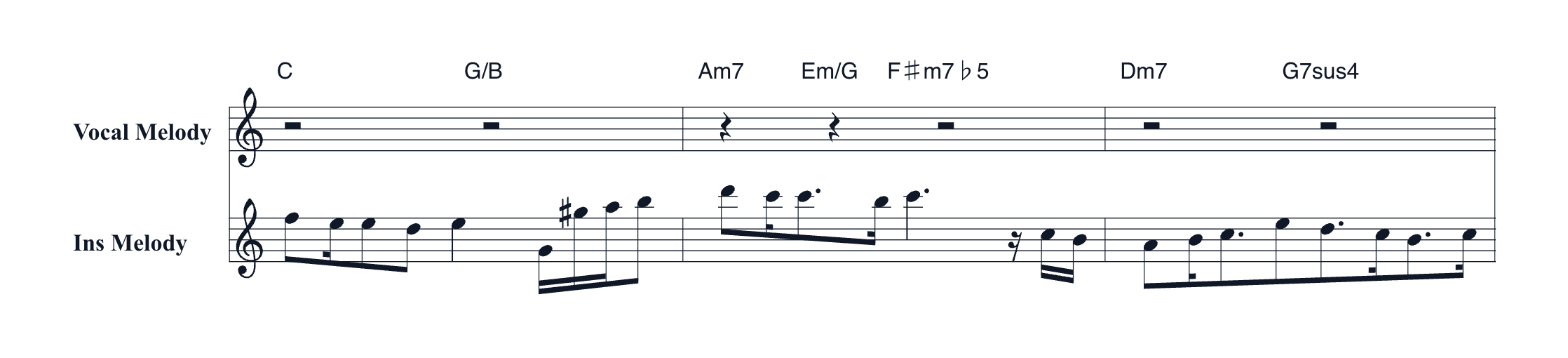
Drop an MP3, WAV, M4A or FLAC up to 10 minutes, or pick a track from My Music. Your lead sheet lands in minutes with melody, chords, tempo, key and time signature.
2. Check it against your ears
Play the piano playback, click any bar that sounds off and compare it with the recording. Fix your own copy, then save it as PDF or MIDI.
Practice Plan for Better Ears
Fifteen minutes a day beats one long weekend session.
Days 1 and 2
Tap tempos and count bars on three songs.
Days 3 and 4
Sing and write one short melody each day.
Days 5 and 6
Trace bass lines and name the chords.
Day 7
Run a song through AI and check the draft by ear.

How to transcribe music questions
How long does it take to learn how to transcribe music?
Simple folk and pop tunes click within a few weeks of short daily sessions. Fast solos and dense harmony take months of steady practice.
Do I need perfect pitch?
Relative pitch is the real skill. Hear the distance between notes, anchor on the key and the rest follows with practice.
Should I start with the melody or the chords?
Start with the melody. It gives you the key and the phrase shape, then the bass line points you to each chord.
Which tools help most?
A slow down player, a metronome, a pencil and an AI draft. The BPM and Key Finder settles tempo and key in seconds.
How do I check my transcription?
Play your sheet back next to the recording bar by bar. Click a note in the AI draft to jump to any spot and compare.
Turn your favorite song into a lead sheet
Upload a recording and read the melody, chords and tempo in minutes.